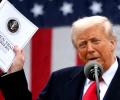
While growth in India is largely domestic and hence the overall GDP effect may not be more than 0.15-0.2%, but overall trade will be impacted due to every country going back to the drawing board, points out Madan Sabnavis.
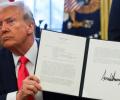
The sweeping tariffs proposed across sectors by US President Donald Trump are scheduled to be imposed starting April 2, with most analysts worried about their impact on companies, and in turn the financial markets. Recently, the US administration signaled that it will impose sectoral tariffs on energy, pharmaceuticals, semiconductors, agriculture, copper, and lumber.

A Rs 23,000-crore production-linked incentive (PLI) scheme for electronic components may boost margins and enable a broader product mix.
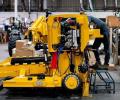
Fresh order wins for capital goods and industrial companies may have seen a major slump due to Lok Sabha polls in the first quarter of the current financial year (Q1FY25). At the same time, revenue and profit growth trajectory is expected to have stayed the course, according to brokerage firms. Elara Capital, Motilal Oswal, and InCred Equities expect this sector universe to report a 12- 21 per cent growth in revenue, 21 -36 per cent growth in Ebitda and 24-38 per cent growth in profit on a year-on-year (Y-oY) basis.
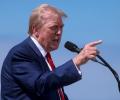
Essential and strategic items such as pharmaceuticals, semiconductors, copper, and energy products like oil, gas, coal and LNG are exempted from the 27 per cent import duty announced by the US on Wednesday, according to think tank GTRI.

India's services sector growth recorded another month of robust expansion in July, albeit at a slightly slower pace than in June, largely supported by robust demand conditions and investment in technology, a monthly survey said on Monday. The seasonally adjusted HSBC India Services Business Activity Index was at 60.3 in July, down only fractionally from 60.5 in June. In the Purchasing Managers' Index (PMI) parlance, a print above 50 means expansion, while a score below 50 denotes contraction.
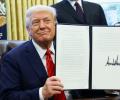
The Trump trade shock is a chance to push long-overdue reforms, rather than tinker with tariffs to appease the US, suggests M Govinda Rao.

India's extreme poverty rate declined sharply to 5.3 per cent over a decade from 27.1 per cent in 2011-12 even as the World Bank revised upwards its threshold poverty line to $3 per day.

The five largest exporters of major arms in 2020-2024 were the US (43 per cent), France (9.6 per cent), Russia (7.8 per cent), China (5.9 per cent), and Germany (5.6 per cent).
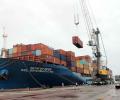
Industry associations and companies in the United States, including the US Chamber of Commerce, Coalition of Services Industries and the iconic bike company Harley Davidson have called on the Donald Trump dispensation to push India to reduce tariffs, non-tariffs, and regulatory barriers to boost American exports.

Amazon will invest more than Rs 2,000 crore (about $233 million) in India in 2025 as it strengthens its logistics and safety standards, said the ecommerce company on Thursday.
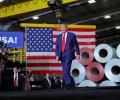
India maintains "high" import duties on a wide range of American goods such as agricultural items, drug formulations, and alcoholic beverages, besides imposing non-tariif barriers, a US report has said. A day before announcing reciprocal tariffs, the US Trade Representative (USTR) released the 2025 National Trade Estimate (NTE) Report on March 31.
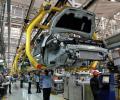
Auto parts exports from India may see a slight slowdown as US President Donald Trump's 25 per cent tariff could increase car prices for buyers by 8-25 per cent, thereby affecting demand, experts believe.
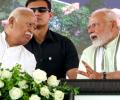
BJP and RSS leaders are once again pushing to remove the words 'secular' and 'socialist' from the Constitution's Preamble, showing a deeper effort to change India's identity from a diverse, multi-religious republic to a Hindu-first nation, even though they don't have the numbers in Parliament to officially change the Constitution, observes N Sathiya Moorthy.

A fresh US executive order (EO) which seeks to bring down prices of prescription drugs in the country by up to 90 per cent -- on par with other developed nations -- will affect innovator companies, while sparing the Indian generic drug makers in the short term. US President Donald Trump signed the EO on Monday, directing the US Trade Representative and the Secretary of Commerce to act against foreign countries that "purposefully and unfairly undercut market prices", driving price hikes in the US.

Here is a list of Q & As to explain these issues and implications of the US move.

As in-person negotiations between India and the US kickstarted on Wednesday, Treasury Secretary Scott Bessent said he expected India to strike the first bilateral trade deal to avert President Donald Trump's reciprocal tariffs.

'That combination of a rising economy, a growing middle class, and a deepening love of diamonds and jewellery is what we see really doubling the market for diamonds over the next five years.'

Indian drugmakers supply 47 per cent of the generic medicine requirements in the US, and tariffs would have increased prices in the US domestic market for patients, who are already dealing with drug shortages.

From the 30 Sensex firms, IndusInd Bank, Asian Paints, Hindustan Unilever, Tata Motors, Tata Steel, Titan, Reliance Industries and NTPC were among the major laggards. Tech Mahindra, Mahindra & Mahindra, Kotak Mahindra Bank, Infosys, HCL Technologies and State Bank of India were among the major gainers.

The apparel and engineering sectors have already witnessed the trend in the past one week. If this continues, it can have an impact on the overall export demand in the coming months, considering that Europe is the largest national export market for India.

'We have to be prepared for the larger disruption that is likely to take place.'

'There is a need for a national task force with a singular objective to increase automotive exports.'
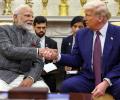
India should convert the Trump threat to an India opportunity, re-embracing a more liberal trade regime as a way of reviving manufacturing output and exports.
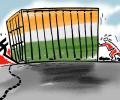
'We believe that in the new world order FTAs or bilateral trade agreements (BTAs) are the way forward.' 'They are enablers for our participation in global value chains. Today, around 70 per cent of global trade is tied to these chains.'
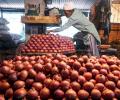
The government has banned exports of onion till March next year with a view to increase domestic availability and to keep prices in check. "Export policy of onions... is amended from free to prohibited till March 31, 2024," the Directorate General of Foreign Trade (DGFT) said in a notification. Local vendors in the national capital are selling onions at Rs 70-Rs 80 per kg.
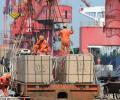
India's exports fell for the fourth straight month in June as shipments of key segments like petroleum and textiles declined but the country's trade turned surplus for the first time in 18 years as imports dropped by a steeper 47.59 per cent.
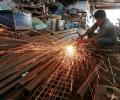
India's manufacturing sector output increased at a sharp pace in June as new business continued to flow in amid favourable demand conditions and resulted in record upturn in employment, a monthly survey said on Monday. The seasonally adjusted HSBC India Manufacturing Purchasing Managers' Index (PMI) increased from 57.5 in May to 58.3 in June, indicating a sharper improvement in business conditions. In PMI parlance, a print above 50 means expansion, while a score below 50 denotes contraction.
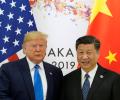
'If you compare the data from 2017 and 2023 of the US imports from the world and China, you will see that the US was a complete loser in the trade war, and China was a complete gainer.'
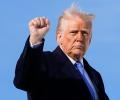
'Many of these issues will be resolved within 6 months because the US economy has started unravelling.'

In FY22-23, Samsung exported $4.09 billion smartphones from India -- an increase of 42 per cent over 2021, when it was $2.8 billion -- accounting for 35 per cent of all smartphone exports.

India's services sector activity fell to a 10-month low in September as new businesses, international sales and output growth moderated, a monthly survey said on Friday. The seasonally adjusted HSBC India Services Business Activity Index fell from 60.9 in August to 57.7 in September, indicating that though the output registered an increase, the pace of growth was the slowest since November 2023. In the Purchasing Managers' Index (PMI) parlance, a print above 50 means expansion, while a score below 50 denotes contraction.
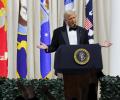
'The US is strongly placed to expand its crude supplies to India.'
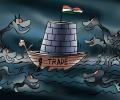
The Indian economy could remain less affected by global trade wars than other countries because the two engines of domestic growth - consumption and investment - are likely to face a limited impact from such headwinds, according to an article on the 'State of the Economy' in the Reserve Bank of India's (RBI's) bulletin, released on Tuesday.

India has put curbs on wheat exports through the government route, starting November last year. This comes amid a surge in domestic prices of the cereal. In December, India exported 391 tonnes of wheat to Bangladesh and Bhutan. In November 2022, it had exported 375 tonnes of wheat only to Bhutan.
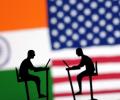
India and the US have finalised the terms of reference outlining the roadmap for negotiations of the proposed Bilateral Trade Agreement (BTA), according to a statement issued by the US. US Trade Representative (USTR) Jamieson Greer said that these ongoing talks will help achieve balance and reciprocity by opening new markets for American goods and addressing unfair practices that harm US workers.
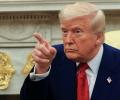
Trump's sweeping tariffs and penalties on China-built ships have turned global shipping into the front line of economic war, observes Shyam G Menon.

India's manufacturing sector growth moderated in August as output and sales rose at slowest rates since January, while competitive pressures and inflation concerns hampered business confidence, a monthly survey said on Monday. The seasonally adjusted HSBC India Manufacturing Purchasing Managers' Index (PMI) stood at 57.5 in August, below July's reading of 58.1 but above its long-run average of 54.0, signalling a substantial improvement in operating conditions.

US shale oil would act as an alternative to India's heavy dependency on Russian crude, which is currently facing sanctions.

Engineering and construction major Larsen & Toubro (L&T) reported a 25 per cent rise in net profit attributable to the owners of the company for the January-March quarter of 2024-25, owing to higher revenues and an exceptional gain. For the quarter under review, L&T posted a consolidated net profit of Rs 5,497.3 crore, while revenue rose 10.9 per cent year-on-year (Y-o-Y) to Rs 74,392.28 crore.
 © 2026 Rediff.com - Advertise with us - Disclaimer - Privacy Policy - Sitemap - Feedback - About us - Terms of use - Grievances